
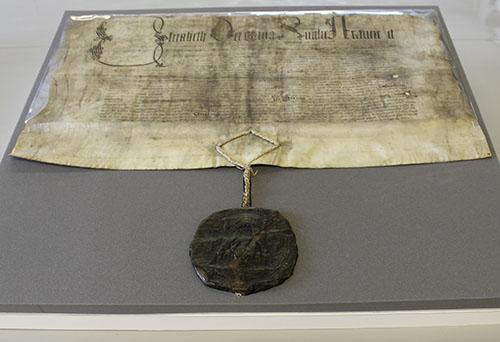
The Foundation of Guisborough Hospital
In 1561, Robert Pursglove was granted Letters Patent (also called the Charter) from Elizabeth I enabling him to found the free school and almshouses in Guisborough.
The Charter allowed Pursglove to write a set of Statutes, rules by which the hospital was to be goverened.
Pursglove also gave the hospital a large oak chest, within which they were meant to keep the charter, statutes, accounts and the hospital's money.
Prior Pursglove College still has that chest, and you will find photographs of it here with its original locks and keys. You will also find photographs and a translation of the charter and the original foundation statutes.
The Charter
This is our Foundation Charter - the Letters Patent granted by Elizabeth I on 25 June 1561 which enabled Robert Pursglove to found his free school and almshouses in Guisborough.
It is written in Latin on parchment - made from animal skin, probably goat or calf - and has the royal seal in green wax.
To read a translation of the charter in full, click here.
In spring 2012, the charter was conserved thanks to our grant from the Heritage Lottery Fund. Before this work, the charter was glued to a board and in a very poor state of repair with considerable fading from light and damage from water and moist conditions.
Conservator Rachel Greenwood carefully removed the charter from its board, cleaned the parchment, reinforced the holes, and repaired the seal. She made a new display so that the charter can be stored safely in a cabinet that was specially made for it in the twentieth century.
The charter is kept at Prior Pursglove College under monitored conditions. It can be viewed by appointment.
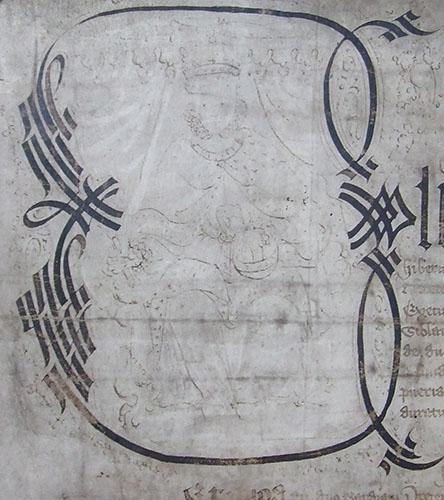
Detail of the Chater: Illuminated Capital
This illuminated capital E contains a portrait of Elizabeth I enthroned and holding the orb and sceptre, symbols of her power and authority. It is the first letter of the first line of the charter, which reads (in translation) 'Elizabeth by the Grace of God of England and France Queen Defender of the Faith &c.'.
This photograph was taken before restoration, and clearly shows damage from moisture and light. The ink has come loose from the page in places, and the linework of the illustration is considerably faded.
Originally, there was a band of foliate decoration at the top of the document in red and black, but the red has faded so badly it can only just be seen with the naked eye, and the black decoration is very pale.
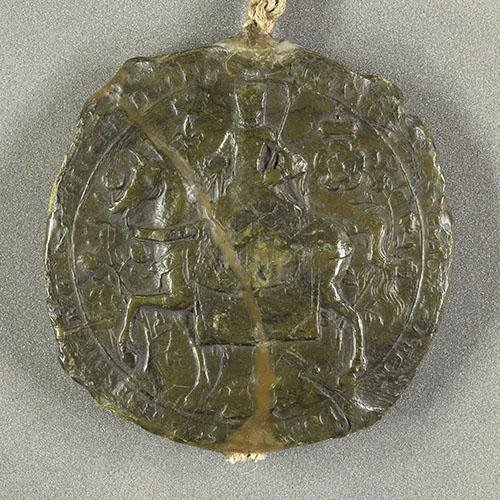
The Royal Seal: Elizabeth I on Horseback
This is one side of the royal seal of Elizabeth I, which hangs from the Charter. It shows Elizabeth I on horseback holding a sceptre.
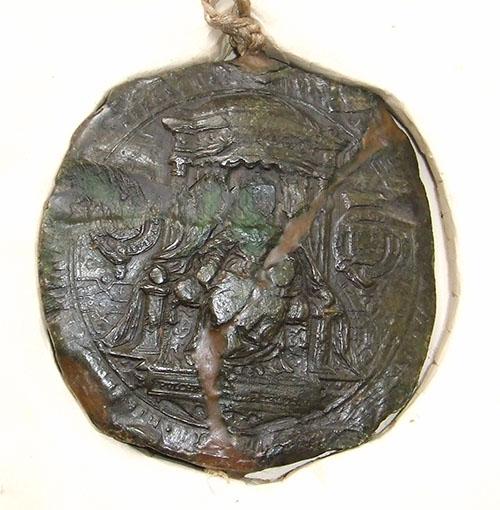
The Royal Seal: Elizabeth I enthroned
This side of the royal seal shows Elizabeth I enthroned and holding the orb and sceptre, as in the illumination on the main body of the Charter.
This photo was taken before conservation, and shows old repairs and damage to the surface.
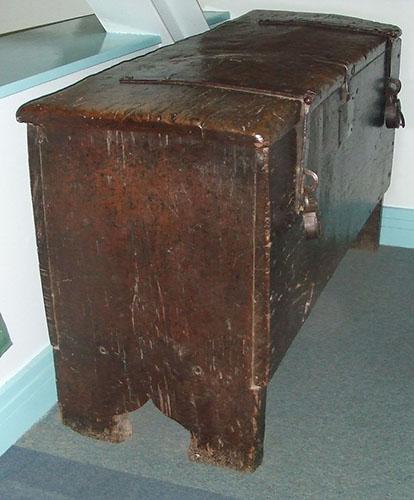
The Chest
This chest has been with us for centuries. We believe it to be the same chest that Robert Pursglove gave to the Jesus Hospital in 1561, and that he wrote about in the Statutes.
Pursglove wrote:
'I have provided one chest with three divers locks and keys, to be the common chest of the said corporation. I ordain and establish by these presents that the said chest shall be set in the schoolmaster’s chamber, and that in the said chest shall be put the Queen’s Highness letters patent giving licence to make this foundation and erection; and one part of this tripartite made concerning the foundation and ordinances of this corporation, with all evidences and other writing appertaining to the same, the common seal also of this corporation, and all sums of money as remain of the rents and other profits appertaining to the same corporation'.
Prior Pursglove College still has the original keys, and the padlocks still work. Nothing is kept in the chest any more.
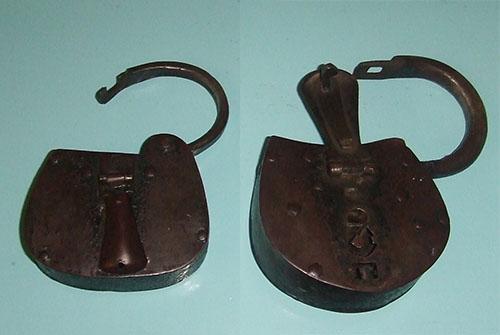
Padlocks, sixteenth century
These padlocks belong to the sixteenth-century chest.
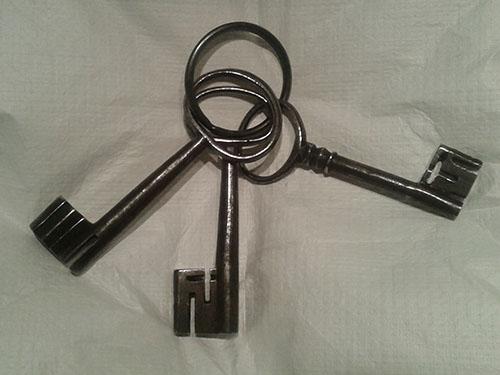
The Keys to the Chest
These sixteenth-century keys unlock the corporation chest of Guisborough Hospital.
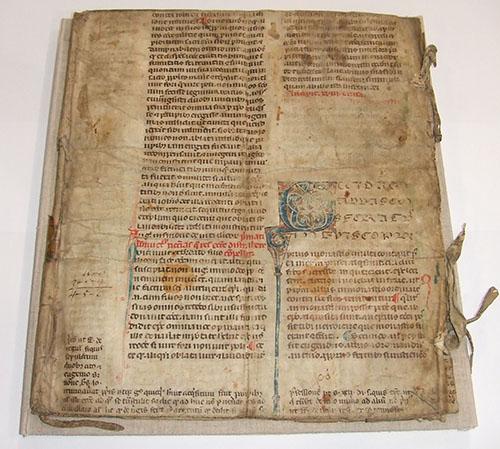
The Statutes
Robert Pursglove wrote several copies of the statutes on parchment. These were bound using pages from a medieval manuscript that was already three hundred years old. To see the covers in detail, click here.
The statutes give detailed instructions regarding the organisation and governance of the free grammar school and almshouses. They are similar to the statutes of St Paul's School in London, where Robert Pursglove himself was educated.
To read the statutes in full, click here. The copy you will see was transcribed and printed in the eighteenth century, and the typeface is very similar to modern fonts.